
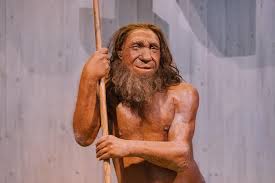
What if humans weren’t always alone on Earth?
Not long ago, another human species walked this planet—strong, intelligent, and adapted to harsh environments.
They were the Neanderthals.
And then… they disappeared.
👉 So what really happened?
Did we replace them… or something more complex?
🧬 Who Were the Neanderthals?
Neanderthals (Homo neanderthalensis) were a human species that lived in Europe and parts of Asia between ~400,000 and 40,000 years ago.
They were not primitive or “less intelligent” as often portrayed.
Research supported by institutions like the Smithsonian Institution shows they:
- Used tools
- Controlled fire
- Created art and ornaments
- Buried their dead
👉 In many ways, they were remarkably human.
So why didn’t they survive?
⚠️ The Mystery of Their Extinction
Neanderthals didn’t disappear overnight.
Their extinction was a gradual process—and scientists still debate the exact causes.
But several powerful factors likely worked together.
🧠 1. Competition With Homo Sapiens
When modern humans (Homo sapiens) left Africa, they encountered Neanderthals.
And this changed everything.
Humans may have had advantages:
- More advanced communication
- Larger social networks
- Better cooperation
👉 Small differences… with massive consequences.
Over time, Homo sapiens may have outcompeted Neanderthals for:
- food
- territory
- resources
🌍 2. Climate Change
Neanderthals lived during a period of intense climate fluctuations.
As environments changed:
- food sources shifted
- habitats disappeared
While Neanderthals were adapted to cold climates, rapid environmental changes may have been too much.
👉 Adaptability became the key to survival.
🧬 3. Interbreeding (A Surprising Twist)
Here’s something most people don’t know:
👉 Neanderthals didn’t completely disappear.
Modern humans still carry Neanderthal DNA.
Genetic studies referenced in journals like Nature show that:
- Non-African populations have about 1–2% Neanderthal DNA
This means:
👉 Humans and Neanderthals interbred.
So part of them… still exists in us.
⚠️ 4. Small Population Size
Neanderthals lived in relatively small, scattered groups.
This made them vulnerable to:
- disease
- environmental changes
- genetic issues
👉 A small population has less resilience.
🦠 5. Disease and Biological Factors
Some scientists suggest that diseases carried by Homo sapiens may have affected Neanderthals.
Without immunity, even small outbreaks could have had large effects.
🔥 The Real Answer
So what caused their extinction?
👉 Not one thing—but a combination:
- competition
- climate change
- interbreeding
- small populations
- possible disease
Together, these factors slowly reduced Neanderthal populations until they disappeared as a distinct species.
🤯 The Most Surprising Truth
Neanderthals didn’t just vanish.
👉 They were absorbed.
Part of their genetic legacy lives inside millions of humans today.
Which leads to a fascinating idea:
👉 Extinction doesn’t always mean complete disappearance.
🔮 A Question That Changes Perspective
So here’s something to think about:
👉 If another human species existed today… would we coexist—or compete again?
Because history suggests the answer might not be simple.
📘 Final Thought
The story of Neanderthals isn’t just about extinction.
It’s about survival, adaptation, and the fragile balance that determines which species continue—and which fade away.
And when you realize that another human species once shared this world…
👉 You start seeing humanity very differently.
Not as the only version of “human”…
…but as the one that remained.