
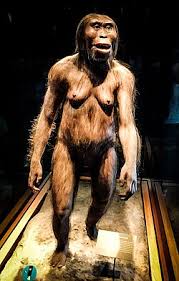
What if the “first human” never actually existed?
It sounds strange, but science reveals something unexpected:
👉 There was no single moment when the first human suddenly appeared.
Instead, humanity emerged through a slow, gradual process over millions of years.
So… who was the first human?
🧬 What Do We Mean by “First Human”?
When people ask this, they usually mean:
👉 When did Homo sapiens first appear?
Modern humans—Homo sapiens—emerged around 300,000 years ago in Africa, based on fossil evidence studied by institutions like the Smithsonian Institution.
But here’s the important part:
👉 Evolution doesn’t work in clear “before and after” steps.
There was no first baby that was suddenly “human.”
Instead, populations changed gradually over many generations.
🧍 The Closest Thing to a “First Human”
If we had to point to the earliest humans, we would look at:
👉 Early Homo sapiens fossils found in Africa
One of the most important discoveries comes from:
- Jebel Irhoud (Morocco) → ~300,000 years old
These individuals already showed:
- human-like faces
- evolving brain structures
- advanced tool use
👉 They weren’t exactly like us… but they were very close.
⚙️ How Did Humans Actually Appear?
Humans didn’t appear suddenly—they evolved from earlier species over millions of years.
The process looked like this:
- Early primates
- Early hominins (walking upright)
- Species like Homo habilis and Homo erectus
- Gradual development into Homo sapiens
👉 Each step involved small genetic changes that improved survival.
Over time, those changes accumulated—until modern humans emerged.
🧠 Why There Was No “First Human”
Here’s the key idea:
👉 Evolution is continuous.
Imagine a long line of generations:
- Parent
- Child
- Grandchild
Each one is almost identical—but slightly different.
Now stretch that over hundreds of thousands of generations.
At some point, the differences become significant—but there is no clear “first human.”
👉 It’s a transition—not a moment.
🌍 Where Did the First Humans Live?
All evidence points to:
👉 Africa as the birthplace of modern humans
This is supported by fossil discoveries and genetic studies published in journals like Nature.
From there, humans began migrating across the world around:
👉 60,000–70,000 years ago
⚠️ Common Misunderstanding
❌ “The first human was one individual”
✔️ False → It was a population
❌ “Humans appeared suddenly”
✔️ False → It was gradual
❌ “We know exactly who the first human was”
✔️ False → Evolution doesn’t work that way
🔥 The Real Answer
So what was the first human?
👉 Not a person—but a process.
Modern humans are the result of:
- millions of years of evolution
- countless generations
- continuous adaptation
🔮 A Question That Changes Perspective
So here’s something to think about:
👉 If there was no first human… could there be a “last” version of humanity?
Because evolution doesn’t stop.
📘 Final Thought
The idea of a “first human” is simple—but reality is far more fascinating.
We are not the beginning of humanity.
👉 We are part of an ongoing transformation.
And just like there was no clear starting point…
👉 There may be no clear end.